
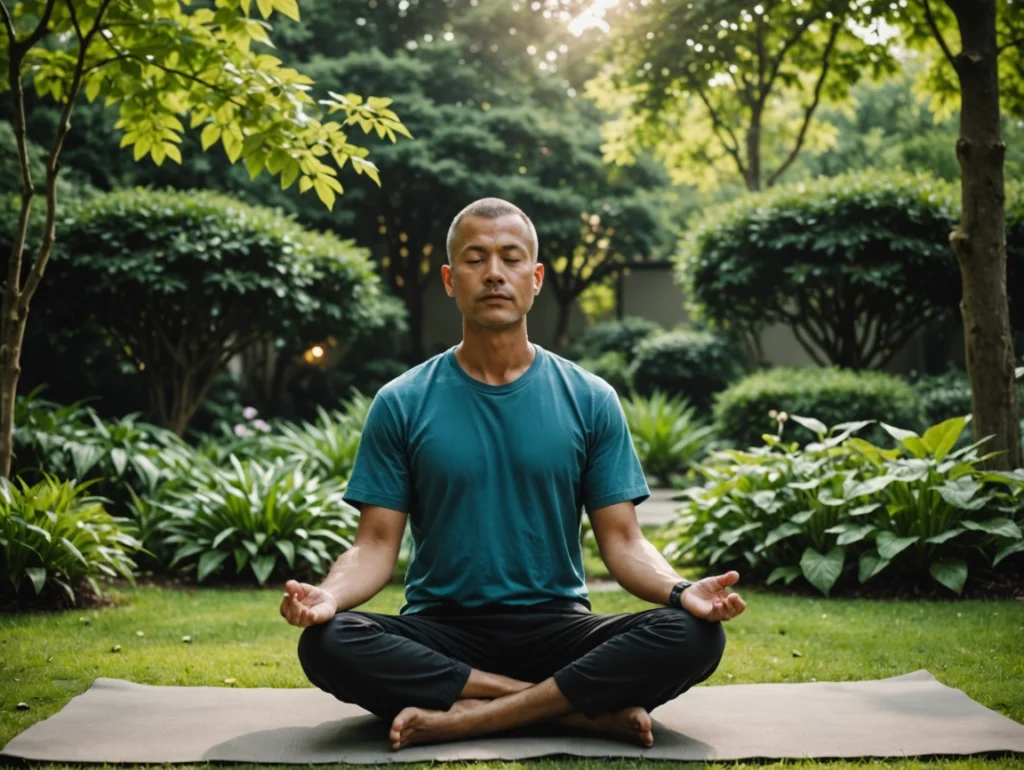
Short verdict: Meditation can reduce anxiety symptoms for some people, but the effects are usually modest and vary widely between individuals. It is not a cure, not universally effective, and not merely “fake”—yet a meaningful portion of its benefit overlaps with the same factors that make many supportive interventions helpful.
That middle ground is where the strongest evidence sits, even though it’s rarely where online conversations land.
How meditation became a mental health staple
Meditation didn’t start as a wellness battleground. It entered mainstream health conversations gradually, first through stress reduction programs in clinical settings, then through therapy-adjacent approaches like mindfulness-based cognitive therapy. Over time, it was absorbed into the broader wellness industry, where its framing changed.
What was once presented as a structured skill taught over weeks became a promise of rapid relief: five minutes a day to quiet your mind, rewire your brain, and dissolve anxiety. At the same time, critics pushed back just as hard, dismissing meditation as vague or placebo-driven.
The result is a polarized narrative. Meditation for anxiety is either portrayed as a near-miracle or as empty ritual. Neither framing reflects what the best human research actually shows.
What people usually mean when they say “meditation”
In research, “meditation” is not a single practice. Most evidence related to mindfulness for anxiety comes from structured programs, particularly mindfulness-based stress reduction (MBSR) and mindfulness-based cognitive therapy (MBCT). These are typically 8-week courses that include guided meditation, education about stress and cognition, group discussion, and regular homework practice.
Outcomes from these programs do not automatically generalize to brief, unguided, or app-based meditation practices. This distinction matters when people ask whether meditation helps anxiety, because the format and context shape outcomes.
What the strongest human evidence actually shows
When data from randomized controlled trials are pooled, a consistent pattern emerges.
Meditation-based programs tend to reduce anxiety symptoms more than doing nothing at all or remaining on a waitlist. On standardized anxiety scales, average improvements typically fall in the small-to-moderate range, with substantial variability between individuals.
When meditation is compared to usual care or minimal interventions, benefits are clearer. When it is compared to time- and attention-matched active controls—such as health education or relaxation training—the differences shrink. When compared with other structured therapeutic interventions, effects can become very small.
This suggests that part of meditation’s benefit overlaps with common therapeutic factors such as structure, expectation, guided attention, and social support. This inference comes largely from trials that carefully match these elements across comparison groups.
There is also evidence that meditation-based programs can be clinically useful for people with diagnosed anxiety disorders. In a large noninferiority trial with defined inclusion criteria and structured support, an 8-week mindfulness-based program performed similarly to an SSRI medication for anxiety disorders within that study design. This supports meditation as an evidence-based option for some individuals, but not as a universal replacement for medication.
Long-term outcomes remain less certain. Many trials include limited follow-up periods, and continued benefit appears influenced by ongoing practice and adherence.
Why the placebo question misses the point
The term “placebo” is often used to imply that a treatment lacks real effect. In mental health research, this framing is misleading.
Psychological interventions work through multiple pathways: expectation, structured reflection, emotional regulation, behavioral change, and therapeutic support. These are not incidental factors; they are central to symptom improvement.
Meditation likely combines general therapeutic factors with more specific skills, such as noticing anxious thoughts without escalating them or reducing habitual rumination. The evidence does not support a clean separation where meditation’s effects are either purely placebo or purely mechanistic.
A more useful question is how much of meditation’s benefit is specific to the practice itself versus shared with other supportive interventions. On that question, the evidence suggests a modest unique contribution that depends heavily on context and comparison.
Claims that go beyond what the evidence supports
Several popular claims about meditation and anxiety are not well supported.
Meditation does not reliably eliminate anxiety, particularly in severe or chronic cases. Lack of improvement does not indicate incorrect practice or insufficient effort.
Claims that meditation rapidly rewires the brain in a way that guarantees anxiety relief oversimplify mixed neuroimaging findings that do not translate directly into predictable clinical outcomes.
Meditation is also not risk-free. Some participants report increased anxiety, emotional distress, sleep disruption, or dissociative experiences, particularly during intensive practice. The true prevalence of these effects is unclear because adverse outcomes are inconsistently defined and measured across studies.
What meditation is often confused with
Meditation is frequently equated with relaxation. While relaxation can occur, many mindfulness practices involve increased awareness of discomfort, which may initially heighten anxiety for some people.
It is also often conflated with therapy. Meditation programs share features with therapeutic interventions but are not equivalent to individualized cognitive behavioral therapy or trauma-focused treatments. Most clinical guidelines continue to prioritize CBT and SSRIs or SNRIs as first-line treatments for anxiety disorders.
Finally, meditation is often framed as a personal virtue rather than a tool, creating unnecessary pressure when it does not help.
Who might reasonably care more about meditation for anxiety
Meditation for anxiety may be relevant for people with mild to moderate symptoms, high stress levels, or persistent rumination who are seeking a structured, non-pharmacologic approach.
It may also be considered by individuals who cannot tolerate medication, prefer not to use it, or want an additional skill alongside established treatments. Access to well-designed, instructor-led programs appears to increase the likelihood of benefit.
Who likely does not need to worry
People who are functioning well do not need meditation for mental health protection. It is not a required practice for psychological well-being.
Those who have tried meditation and found it unhelpful are not missing a uniquely necessary intervention. Other approaches—including therapy, medication, physical activity, or social support—can be equally valid.
For individuals with severe, worsening, or highly impairing anxiety, meditation alone is unlikely to be sufficient and is best viewed as optional or adjunctive rather than primary care.
The practical bottom line
Meditation can help reduce anxiety symptoms, but its effects are typically modest and context-dependent. It is neither a cure nor a sham. Much of its benefit overlaps with factors common to other supportive interventions, alongside skills that some people find genuinely useful.
Treating meditation as one possible tool—rather than a moral obligation or a guaranteed solution—aligns expectations with what the evidence actually supports.
A large systematic review evaluating meditation programs for anxiety, depression, and stress-related outcomes.
https://jamanetwork.com/journals/jamainternalmedicine/fullarticle/1809754
A U.S. government evidence review assessing the effectiveness and limitations of meditation programs.
https://effectivehealthcare.ahrq.gov/products/meditation/research
A randomized clinical trial comparing mindfulness-based stress reduction with medication for anxiety disorders.
https://jamanetwork.com/journals/jamapsychiatry/fullarticle/2798510
A review examining adverse and challenging experiences associated with meditation practices.
https://pubmed.ncbi.nlm.nih.gov/35174010/
Clinical guidance summarizing first-line treatments for anxiety disorders and where mindfulness-based approaches fit.
https://www.aafp.org/pubs/afp/issues/2022/0800/generalized-anxiety-disorder-panic-disorder.html