

Quick take: Most people aren’t “dysregulated” in a medical sense—they’re stressed, under-slept, over-caffeinated, or stuck in a worry loop. A lot of “how to regulate your nervous system” content is really about learning skills to shift arousal in the moment. The parts of this topic that hold up best in human research are straightforward: slowing your breathing can help you downshift, and structured training like HRV biofeedback shows average symptom improvements for stress and anxiety. The parts that don’t hold up are the sweeping promises and the idea that a wearable can diagnose your nervous system.
How “regulation” turned into an online diagnosis
The body ramps up under demand, then returns toward baseline when the demand passes. Online, that idea often gets compressed into nervous system dysregulation and used as an explanation for nearly everything.
Wearables helped by turning HRV into a daily “readiness” score. Trauma language spread beyond therapy. Polyvagal Theory offered memorable labels like “shutdown.” The result is a common bait-and-switch: normal stress reactions (fight-or-flight included) get framed as damage, and the “fix” becomes a lifestyle.
What nervous system regulation refers to
Most of this conversation maps onto the autonomic nervous system (ANS), which adjusts heart rate, breathing, blood pressure, digestion, and sweating without conscious effort.
A simplified model that’s useful:
- Sympathetic activity supports mobilization (the “upshift”).
- Parasympathetic activity supports recovery (the “downshift,” sometimes called “rest-and-digest”).
Health isn’t staying in rest-and-digest all day. It’s adaptability: upshifting when needed, downshifting when possible, and not getting stuck.
Breathing: the lever you can actually move
Breathing is automatic, but steerable. That makes it one of the cleanest ways to influence arousal without needing a complicated story about “hacking” nerves.
Slow-paced breathing (often around 5–7 breaths per minute)
Across randomized trials, deliberate breath practices—many of them slow, paced breathing—are associated with small-to-moderate average reductions in self-reported stress, and similar-sized average improvements in anxiety and depressive symptoms. Authors also emphasize that study methods vary, and longer follow-up is limited. Translation: there’s a measurable benefit on average, but it’s not a magic trick and it’s not equally proven for every outcome.
A key limitation: the strongest evidence is often about immediate physiology and short-term symptoms. Many studies run for days or weeks, so it’s harder to say how durable the changes are months later.
“Breathwork” is a category, not one intervention
Online, breathwork can mean gentle nasal breathing, paced breathing for HRV, breath holds, or fast “connected” breathing that resembles controlled hyperventilation. Pooling these together makes results easy to summarize and hard to interpret. Technique, dose, and setting matter.
Who should be cautious with intense breath practices
Hyperventilation-like practices can trigger dizziness, tingling, panic-like sensations, or dissociation in some people—especially those prone to panic or dissociation. Breath holds and forceful practices may also be a poor fit for some cardiopulmonary conditions. The safest claims tend to belong to slow, comfortable breathing that doesn’t push you toward lightheadedness.
HRV, vagal tone, and the wearable trap
Wellness content often treats “vagal tone” as a trait you can raise quickly and treats HRV as the scoreboard. Physiology is messier.
Many “vagus nerve exercises” you see online (humming, cold exposure, certain breathing drills) are best thought of as arousal-shifting techniques. Some may produce short-term effects; the strongest human trial evidence still clusters around slow, paced breathing and structured training.
HRV is real—but it’s not a regulation grade
Heart rate variability (HRV) is variation in the time between heartbeats. Under standardized conditions, some HRV metrics are used as imperfect indicators of cardiac parasympathetic modulation. But HRV is also shaped by breathing rate and depth, sleep, fitness, illness, alcohol, medications, posture, and measurement artifacts. That’s why classic standards papers emphasize careful measurement and interpretation.
Two common misreads:
- “Higher HRV always means healthier.” Higher HRV often correlates with better outcomes in population data, but it’s not a universal “more is better” number.
- “Today’s HRV tells me if I’m regulated.” Day-to-day HRV is noisy, and different devices aren’t interchangeable.
Why breathing can “raise HRV” without proving a deeper change
Slow breathing tends to amplify the heart’s breathing-linked rhythm (often called respiratory sinus arrhythmia). That predictable state change can be useful. It is not proof that baseline resilience has permanently shifted.
HRV biofeedback: a more structured skills program
HRV biofeedback pairs paced breathing with real-time feedback about heart rhythm patterns, often targeting an individual “resonance” frequency (commonly close to ~6 breaths per minute). A meta-analysis in Psychological Medicine found HRV biofeedback was associated with reduced stress and anxiety symptoms on average, but the underlying studies were relatively small and varied in design, and longer follow-up is limited.
The conservative takeaway: HRV biofeedback is a plausible skills-training approach with human trial support, not a shortcut around sleep, mental health care, and recovery time.
Somatics: plausible ideas, smaller evidence base
“Somatic” can mean body awareness and interoception practices, movement-based tools, or specific trauma therapies like Somatic Experiencing. The reasonable claim is that attention to bodily sensations and movement can influence emotion and arousal. The oversold claim is that trauma is literally “stored in tissues” and released like a toxin through targeted exercises.
A scoping review describes Somatic Experiencing research as early-stage but promising. Randomized trials report meaningful symptom reductions in some populations, but replication and clarity about who benefits most are still developing, and adverse-event reporting is not always detailed.
How this fits with mainstream PTSD guidance
For PTSD, the VA/DoD guideline prioritizes trauma-focused psychotherapies (for example, prolonged exposure, cognitive processing therapy, and EMDR). It also notes that many mind-body approaches have insufficient evidence to recommend for or against, while giving mindfulness-based stress reduction a weak “for” suggestion. That doesn’t make somatic approaches useless; it means they haven’t earned the same confidence level as treatments with larger, replicated evidence bases.
Polyvagal Theory: why it resonates, and why it’s debated
Polyvagal Theory is popular because it offers a coherent language for feeling safe vs alarmed vs shut down. Some elements overlap with widely accepted physiology (the vagus nerve influences cardiac function; autonomic patterns relate to stress). The controversy is about specificity and testability: how confidently the theory’s evolutionary claims and proposed “circuits” map onto measurable biology and clinical outcomes.
For consumers, the safest stance is simple: polyvagal language can be a helpful metaphor, but it shouldn’t be treated as settled neuroanatomy—or as something a wearable can diagnose.
Where the loudest claims go too far
- “A dysregulated nervous system is the hidden cause of most illness.” Chronic stress can worsen symptoms and risk factors, but most conditions have multiple drivers.
- “Fix vagal tone and you fix anxiety or trauma.” Breathing and skills practice can shift arousal. Durable symptom change—especially in PTSD—belongs in a different evidence category.
- “HRV equals vagal tone equals emotional health.” HRV is influenced by many non-emotional variables, and measurement context matters.
- “Somatic work releases stored trauma.” Improvements can be explained by skills practice, attention training, exposure to sensations, and therapeutic alliance—without requiring a literal storage-and-release model.
What people often mistake for “dysregulation”
Sleep debt, caffeine/stimulant swings, under-fueling, deconditioning, and untreated anxiety/depression can all look like “dysregulation.” The label can feel validating, but it can also blur what needs basic recovery versus what needs clinical care.
Who might care more—and who likely doesn’t
These tools tend to be most relevant for people with frequent stress spikes, people in therapy who want between-session skills for bodily arousal, and people exploring somatic approaches as an adjunct (especially alongside guideline-supported care). If you’re functioning well and simply having a stressful season, you likely don’t need to treat “vagal tone” as a personal project. Chasing HRV scores can become another loop of vigilance.
Where this leaves you
The least dramatic version of nervous system regulation is the one that survives scrutiny: you can learn skills that shift arousal and support recovery from stress. Slow, comfortable breathing is one of the clearest levers. HRV biofeedback may add structure for some people. Somatic approaches look promising but sit on a smaller and more variable research base than first-line PTSD therapies. And “vagal tone” is not a single number that tells you whether you’re healed.
A measurement tool, not a “fix”: Polar H10 Heart Rate Sensor
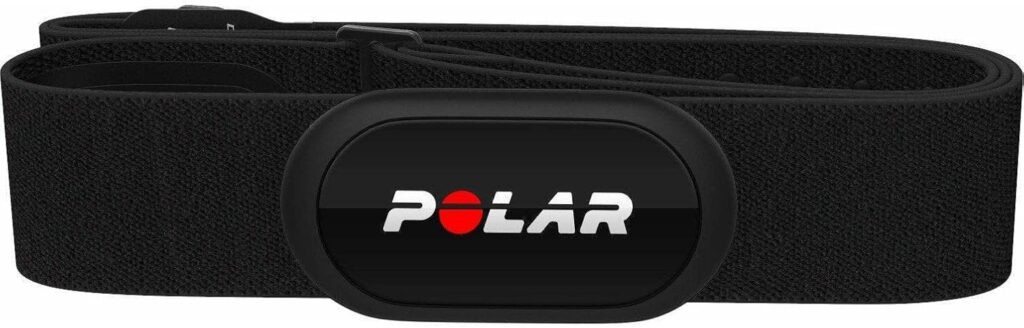
If you’d like to experiment with the paced-breathing/HRV-biofeedback idea discussed above without turning it into a lifestyle project, the Polar H10 Heart Rate Sensor is a practical option. We’d suggest it for readers who want a more consistent heart-rhythm signal than many wrist wearables can provide—so the data is less distracting and the practice is easier to keep consistent.
- Prioritizes cleaner data over flashy features (chest-strap sensors typically capture beat-to-beat timing more reliably than wrist optics, especially when you’re moving).
- Avoids “vagus hack” positioning (it’s just measurement hardware—no built-in claims about curing stress, trauma, or “dysregulation”).
- Supports consistency by making it easier to track the same breathing practice under similar conditions, rather than chasing day-to-day HRV swings.
A meta-analysis of randomized trials evaluating breathwork’s effects on self-reported stress, anxiety, and depressive symptoms, with explicit discussion of bias risk and heterogeneity.
https://pmc.ncbi.nlm.nih.gov/articles/PMC9828383/
A meta-analysis focused on HRV biofeedback training for stress and anxiety symptoms, summarizing results across small and varied studies.
https://www.cambridge.org/core/journals/psychological-medicine/article/effect-of-heart-rate-variability-biofeedback-training-on-stress-and-anxiety-a-metaanalysis/A839E9C968E54774DF5C8FB186764EF0
A widely used standards document explaining how HRV should be measured and interpreted, including key limitations and confounders.
https://www.ahajournals.org/doi/10.1161/01.cir.93.5.1043
The U.S. VA/DoD PTSD clinical practice guideline outlining first-line treatments and how mind-body approaches are rated when evidence is limited.
https://www.healthquality.va.gov/HEALTHQUALITY/guidelines/MH/ptsd/VA-DoD-CPG-PTSD-Full-CPG-Edited-111624-V5-81825.pdf
A scoping review summarizing the early research base on Somatic Experiencing, highlighting promising findings alongside major limitations.
https://pmc.ncbi.nlm.nih.gov/articles/PMC8276649/rder-panic-disorder.html