Cold Plunges and Testosterone: What the Evidence Actually Shows

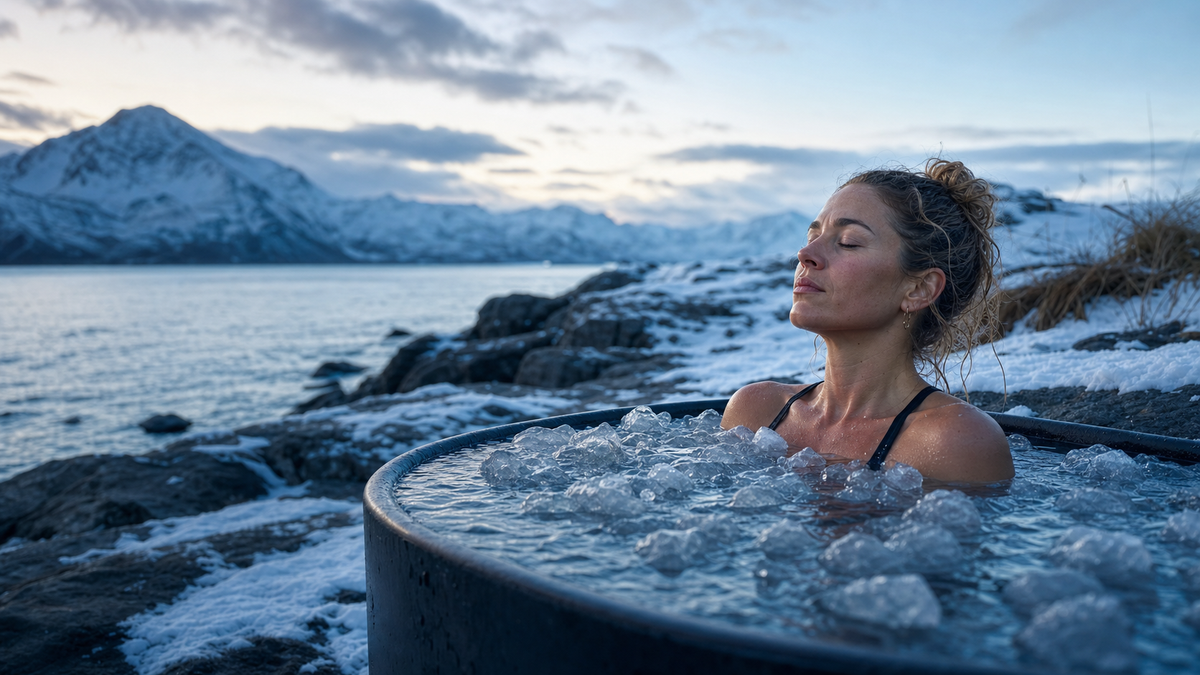
Cold plunges are everywhere right now. Your favorite podcaster swears by them. Your gym just installed one. Every other fitness influencer on Instagram is jumping into a barrel of ice water and declaring it life-changing. And the claim is always the same: testosterone, recovery, mental toughness. Let's see what the studies actually say — and what they don't.
What Even Is a Cold Plunge?
Cold water immersion (CWI) means submerging your body in water that's cold enough to trigger a physiological stress response — typically at or below 15°C (59°F). That can be a dedicated cold plunge tub, an ice bath, a cold shower, or a lake in January. The "deliberate" version popularized by wellness culture usually means sitting submerged up to the neck for anywhere from 1 to 15 minutes.
People have dunked themselves in cold water for centuries. Winter swimming is a Scandinavian and Eastern European tradition. What changed is that this practice got a rebrand, a price tag, and a podcast episode.
What Are People Actually Claiming?
The influencer narrative goes something like this: cold plunges spike testosterone, accelerate muscle recovery, crush inflammation, boost dopamine, and build the kind of mental toughness that carries over into real life. Andrew Huberman's cold exposure episode on the Huberman Lab podcast covers testosterone-boosting potential from cooling the groin area, plus protocol details for maximizing dopamine and norepinephrine release.[1] Wim Hof has built an entire brand around the idea that cold exposure plus controlled breathing rewires your nervous system. David Goggins frames it as a mental crucible. Fitness TikTok has turned the morning plunge into a status signal.
The testosterone claim in particular has taken on a life of its own. The logic is intuitive-sounding: cold stress → hormonal response → more testosterone. If only it were that simple.
So… Does It Actually Work?
Some of it does. Some of it doesn't. And some of it works — but not the way the influencers describe it.
Here's the honest summary: cold water immersion has real, well-documented effects on perceived muscle soreness and recovery. It likely has real effects on mood-related neurochemicals. The mental toughness argument has some psychological backing. But the testosterone story? That's where the evidence gets messy — and actually points the opposite direction from what you've been told.
The Real Studies
Let's go study by study.
On testosterone: A 2025 study published in PLOS ONE put 13 young healthy men through a single cold water immersion below 4°C in extreme conditions. Testosterone levels dropped significantly after the immersion (p = 0.000037) — not increased.[2] The authors noted the changes stayed within non-pathological limits, but the direction is clear: acute cold stress suppressed testosterone in this group, not boosted it.
On muscle soreness and recovery: A 2025 network meta-analysis published in Frontiers in Physiology analyzed 55 randomized controlled trials examining different cold water immersion protocols. The sweet spot for reducing delayed-onset muscle soreness (DOMS): 10–15 minutes at 11°C–15°C (medium temperature) or 5°C–10°C (low temperature). Both significantly reduced DOMS and improved jump performance.[3] This is the most robust finding in the CWI literature — it does help you feel less sore after hard training.
On muscle growth: Here's the catch. A 2019 study in the Journal of Applied Physiology had 16 men do resistance training for 7 weeks, with half doing cold water immersion (15 min at 10°C) after every session. Strength gains were similar between groups. But type II muscle fiber cross-sectional area — the muscle you actually build — was significantly attenuated in the cold group.[4] The cold was blunting the anabolic signal. A 2024 meta-analysis in the European Journal of Sport Science confirmed this across 8 studies: post-exercise CWI likely reduces hypertrophic adaptations from resistance training.[5]
On mental health: A 2025 systematic review and meta-analysis in PLOS ONE analyzed 11 studies covering 3,177 participants. CWI produced a significant reduction in stress 12 hours post-exposure. There were improvements in sleep quality and quality of life. Mood effects were not significant in meta-analysis, though individual studies showed benefits.[6] A separate 2024 case-control study found that people who practiced regular CWI showed lower depression and anxiety scores and higher mental toughness ratings compared to non-practitioners.[7]
On inflammation: The same PLOS ONE meta-analysis found that CWI actually increased inflammatory markers immediately and at 1 hour post-immersion.[6] Inflammation went down later — but the "cold reduces inflammation" line is an oversimplification that ignores the acute spike. The body's response is more nuanced than a simple suppression.
Here's the Fine Print
Most CWI studies use small samples — often 10 to 30 participants, mostly young men. Temperature and duration vary wildly between studies, making comparisons difficult. Very few studies follow people for more than a few weeks. And almost none of the testosterone studies show the prolonged, meaningful increases that influencer content implies.
The mechanisms Huberman cites — dopamine, norepinephrine, epinephrine spikes — are real and well-documented.[1] What's less clear is whether those neurochemical spikes translate into the mood and performance benefits described, and for how long.
Who's Actually Going to Notice a Difference
If you're an athlete in a multi-day tournament or doing two-a-days, cold water immersion is a genuinely useful recovery tool. You're not trying to optimize long-term muscle growth right now — you just need to feel better tomorrow. CWI delivers on that.
If you're trying to maximize muscle growth from your resistance training program, doing cold plunges right after every session is probably working against you. The research suggests waiting at least 6–8 hours post-training, or skipping it on strength-focused days entirely.
If you're a generally stressed person looking for a mental reset — particularly for mood regulation and stress reduction — there's enough evidence to suggest it's worth experimenting with. Just know the effect size is moderate and the evidence base is still young.
Let's Kill Some Myths
Myth: Cold plunges boost testosterone. The only human data we have on acute testosterone response shows a significant decrease after cold immersion, not an increase.[2] There is no robust evidence of a lasting testosterone-boosting effect in humans.
Myth: Cold is always anti-inflammatory. Acutely, cold water immersion increases inflammatory markers. The reduction comes later.[6] The timeline matters.
Myth: Cold after lifting helps you recover and grow. It may help you feel recovered, but it likely blunts the muscle growth signal if done immediately post-training.[4][5] You can't have it both ways.
Myth: The benefits are the same for everyone. Sex, training status, cold tolerance, and the specific protocol (temperature, duration, timing) all affect outcomes. Studies done on young trained men don't automatically apply to everyone.
If You Want to Try It
If You Want to Try It
You don't need a $5,000 tub to start. Here are options at different price points:
- Cold Plunge Tubs on Amazon — Range from budget ice barrel setups to proper cold plunge tubs. Read the reviews carefully — build quality varies a lot.
- Browse on iHerb — Recovery and cold therapy accessories.
- Fullscript — Recovery support supplements.
Heads up: The Amazon link is an affiliate link — we earn a small cut if you buy through it, at no extra cost to you.
Verdict
Cold plunges work — but not quite the way the wellness industry sells them.
The recovery benefits for muscle soreness are real and backed by solid evidence. The mental health and stress-reduction benefits are plausible and growing in support. The acute neurochemical effects (dopamine, norepinephrine spikes) are documented.
The testosterone narrative is not supported by the evidence — and if anything, acute cold stress appears to temporarily suppress it. The "always anti-inflammatory" framing is an oversimplification. And if you're training for muscle growth, regular post-workout cold plunges may be undermining your own gains.
If you enjoy it and it makes you feel better, that's a real, valid reason to do it. Just don't expect it to be a testosterone hack. The studies don't back that up.
Quick Answers
Do cold plunges actually boost testosterone?
No — at least not based on current human data. A 2025 study measuring acute hormonal responses found testosterone levels significantly decreased after cold water immersion. There is no robust human evidence of a lasting testosterone increase from cold plunges.
How cold and how long should a cold plunge be?
The research suggests 10–15 minutes at 11°C–15°C (about 52–59°F) for reducing muscle soreness and improving recovery. Shorter, colder exposures (a few minutes under 10°C) can produce strong neurochemical effects. Huberman's protocol of 11 total minutes per week split across 2–4 sessions is a reasonable starting point.
Should I cold plunge after lifting?
Not if muscle growth is your goal. Multiple studies and a 2024 meta-analysis found that cold water immersion done immediately after resistance training blunts muscle hypertrophy. If you want to use CWI, wait at least 6–8 hours after training, or skip it on strength-focused days.
Can cold plunges help with depression or anxiety?
Possibly, as a complement to other approaches — not as a replacement for treatment. A 2024 study found regular CWI practitioners had lower depression and anxiety scores. A 2025 meta-analysis found stress reduction at the 12-hour mark. The evidence is preliminary but encouraging. Always consult a healthcare provider for mental health concerns.
Does cold water immersion reduce inflammation?
It's complicated. Inflammatory markers actually increase immediately and at 1 hour post-immersion. Longer-term anti-inflammatory effects appear later. "Cold reduces inflammation" is technically true — just not in the simple, immediate way it's usually presented.
References
- Huberman, A. (2022). Using Deliberate Cold Exposure for Health and Performance. Huberman Lab Podcast, Episode 66. https://www.hubermanlab.com/episode/using-deliberate-cold-exposure-for-health-and-performance
- Teległów, A., & Cicha, I. (2025). Single immersion in cold water below 4°C: A health hazard in young healthy men? PLOS ONE. DOI: 10.1371/journal.pone.0324502
- Wang, H., Wang, L., & Pan, Y. (2025). Impact of different doses of cold water immersion (duration and temperature variations) on recovery from acute exercise-induced muscle damage: a network meta-analysis. Frontiers in Physiology. DOI: 10.3389/fphys.2025.1525726
- Fyfe, J., et al. (2019). Cold water immersion attenuates anabolic signalling and skeletal muscle fiber hypertrophy, but not strength gain, following whole-body resistance training. Journal of Applied Physiology. DOI: 10.1152/japplphysiol.00127.2019
- Piñero, A., et al. (2024). Throwing cold water on muscle growth: A systematic review with meta-analysis of the effects of postexercise cold water immersion on resistance training-induced hypertrophy. European Journal of Sport Science. DOI: 10.1002/ejsc.12074
- Cain, T., Brinsley, J., Bennett, H., et al. (2025). Effects of cold-water immersion on health and wellbeing: A systematic review and meta-analysis. PLOS ONE. DOI: 10.1371/journal.pone.0317615
- Mullooly, A., & Colbert, D. (2024). The Relationship Between Cold-Water-Immersion Activities, Mental Health, Self-Efficacy, Resilience, and Mental Toughness. The Sport Psychologist, 38(4), 259. DOI: 10.1123/tsp.2024-0086
The content on this site is for informational purposes only and is not medical advice. Always consult a qualified healthcare professional before making decisions about your health.