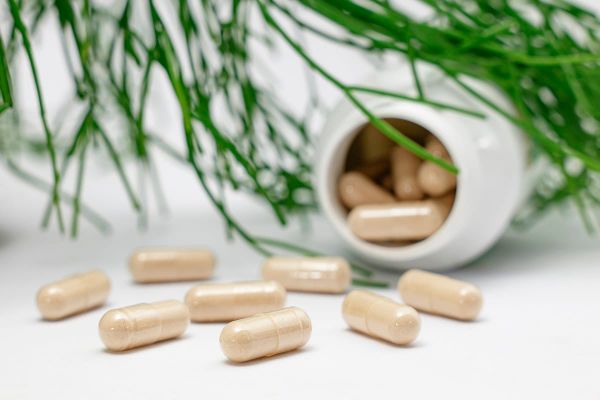
Collagen Peptides for Skin: Does Drinking Collagen Actually Work?


You've seen the videos. Someone adds a scoop of powder to their morning coffee, holds it up to the camera, and says their skin has never looked better. Then a wellness coach swears her clients shaved years off their face just from drinking collagen for 90 days. Then a dermatologist posts a reel saying it's all marketing. So what's actually going on?
Here's the honest answer: the science is real, but it's smaller and messier than the internet makes it look.
What Even Is Collagen?
Collagen is the most abundant protein in your body. It's the structural scaffolding that holds skin together — giving it that firmness and bounce you associate with youth. Starting in your mid-20s, your body makes less of it. By your 40s, you're losing it faster than you're replacing it. The result: thinner skin, more visible lines, less elasticity.
Collagen supplements — usually "hydrolyzed collagen" or "collagen peptides" — are made by breaking down animal collagen (mostly bovine or marine) into smaller chains of amino acids. The idea is that you drink them, absorb them, and your body uses them to make more collagen.
Simple enough. But the biology gets complicated fast.
What Are People Actually Claiming?
On TikTok and Instagram, the claims range from plausible to absurd. The common ones:
- "My skin is glowing and my wrinkles are fading after 30 days."
- "It fixed my gut and my skin at the same time."
- "I stopped using moisturizer — collagen does it all."
- "10g a day is the sweet spot, my dermatologist recommended it."
Wellness coaches often present collagen as a near-magical anti-aging intervention. Some dermatologist-influencers on social media back it up enthusiastically — others are more skeptical. The skeptics' core argument: your digestive system breaks collagen down into amino acids like any other protein, so why would it go straight to your skin?[7]
That's a fair question. But it turns out the studies have something to say about it.
So… Does It Actually Work?
Probably, yes — for skin hydration and elasticity, after at least 8 weeks of consistent use, in adults with already-aging skin. The effect is real but moderate. It is not a substitute for sunscreen, retinoids, or sleep.
The mechanism isn't fully settled. The dominant theory: collagen peptides don't arrive intact in your skin. Instead, small fragments — particularly a tripeptide called Gly-Pro-Hyp — are absorbed into the bloodstream and signal skin fibroblasts to ramp up their own collagen, elastin, and hyaluronic acid production.[1] You're essentially giving your skin a production cue, not a direct top-up.
The Real Studies
Let's go through what the actual human research shows.
The meta-analysis (2023): Pu et al. analyzed 26 randomized controlled trials with 1,721 total participants. The pooled result: hydrolyzed collagen supplementation significantly improved both skin hydration (effect size 0.63, p < 0.00001) and skin elasticity (effect size 0.72, p < 0.00001) compared to placebo. Studies longer than 8 weeks showed stronger effects than shorter ones.[2] This is the most comprehensive evidence we have.
Kim et al. (2018) — 64 women, 12 weeks, 1g/day: Women aged 40–60 with visible crow's feet took 1,000mg of low-molecular-weight collagen peptides daily. At 12 weeks, the collagen group's skin hydration was nearly 3× higher than baseline compared to placebo. Visual crow's feet grades improved significantly vs. placebo (p = 0.013). Elasticity also improved measurably.[3]
Carrillo-Norte et al. (2024) — 80 women, 6 weeks, 2.5g/day: A double-blind, placebo-controlled trial. After six weeks, wrinkle volume dropped 46%, wrinkle area 44%, and skin moisture increased 34% in the collagen group vs. placebo (p < 0.001). Skin firmness didn't change significantly — elasticity only slightly.[4]
Proksch et al. (2025) — 66 women, 8 weeks, 2.5g/day: Bovine-derived bioactive collagen peptides (VERISOL B). Eye wrinkle volume reduced significantly, skin elasticity and hydration improved, all within 4 weeks — with effects more pronounced at 8 weeks. The researchers also ran fibroblast tests in the lab, confirming the peptides directly stimulated dermal collagen production.[1]
Miyanaga et al. (2021) — 99 women, 12 weeks, 1g or 5g/day: Skin water content increased and transepidermal water loss (TEWL) decreased — meaning skin was holding onto moisture better. Natural moisturizing factor (NMF) in the outer skin layer increased. Skin elasticity and thickness? No significant change in this one.[5]
Here's the Fine Print
Before you go all in, a few honest caveats:
Most studies are industry-funded. A lot of the research is funded by collagen manufacturers. That doesn't automatically invalidate results, but it's a conflict worth knowing about.[6]
Sample sizes are small. Most RCTs have under 100 participants, usually women, usually in Asia or Europe. Results may not generalize to everyone.
The studies mostly test specific branded peptides. "Hydrolyzed collagen" is not a single ingredient. Molecular weight, amino acid profile, and source (bovine, marine, porcine) all vary. The product on the shelf may not match what was tested.
Eight weeks is the minimum. The meta-analysis found stronger effects at >8 weeks. If you're evaluating after two weeks, you're not giving it a fair test — and you're also not seeing what the studies measured.
No one knows the optimal dose. Studies range from 1g to 10g/day. Many of the positive skin studies used 2.5g. More is not clearly better.
Who's Actually Going to Notice a Difference
Honestly? Not everyone. The research suggests the biggest benefits show up in:
- Adults 35+ with early-to-moderate signs of skin aging
- People with dry or dehydrated skin to begin with
- Those who are consistent for 8–12 weeks minimum
If you're 22 with naturally hydrated skin and minimal sun damage, you probably won't notice much. If you're 45 and your skin has lost the bounce it had a decade ago, you're a much better candidate for a measurable effect.
Also worth noting: people who smoke heavily, have significant photoaging (chronic sun damage), or have underlying health conditions that impair collagen synthesis may not respond as well.
Let's Kill Some Myths
"Topical collagen works the same way." No. Collagen molecules are too large to penetrate the skin barrier. Creams and serums labeled "collagen" mostly just act as surface moisturizers. The molecule never reaches the dermis where it matters.[7]
"More collagen = more results." Not clearly. The studies don't show a straight dose-response relationship for skin. Going from 2.5g to 10g likely doesn't double your results.
"Collagen replaces sunscreen." Not even close. UV exposure is the number-one driver of collagen degradation and premature skin aging. No supplement offsets sun damage.
"You'll see results in a week." The before/afters you see after 7–14 days are almost certainly better lighting, better angles, or placebo effect. Studies consistently show meaningful changes start at 6–12 weeks.
"All collagen is the same." Marine and bovine peptides have different bioavailability. Molecular weight matters. The specific peptide profile matters. A cheap powder with no transparency about sourcing is not equivalent to a tested branded ingredient.
If You Want to Try It
If You Want to Try It
Here are places to find it without overpaying or getting something sketchy:
- Search Collagen Peptides on Amazon — Look for hydrolyzed collagen (Types I and III) from grass-fed sources. Vital Proteins and Sports Research are popular options.
- Browse on iHerb — Good selection, usually cheaper than Amazon.
- Fullscript — Professional-grade brands.
Heads up: The Amazon link is an affiliate link — we earn a small cut if you buy through it, at no extra cost to you.
Verdict
The evidence is real. It's not hype, but it's not magic either.
Multiple placebo-controlled trials and a 26-study meta-analysis show that oral collagen peptides — around 2.5g/day for at least 8 weeks — improve skin hydration and elasticity in adults with aging skin. Wrinkle reduction is more variable but shows up in several well-designed studies.
The effects are modest. They won't replace a retinoid or SPF 50. They probably won't give you the transformation you saw in someone's TikTok video. But for what it actually claims to do — support skin hydration and structural integrity from the inside — the science has more legs than most supplements.
If you're going to try it: use hydrolyzed collagen (Types I and III), go with a grass-fed bovine or marine source, aim for 2.5–10g daily, and give it three months before forming an opinion.
Quick Answers
How long until collagen supplements work for skin?
Most studies show measurable improvements at 6–12 weeks of daily use. Effects are more pronounced at 8+ weeks. Don't judge the supplement at 2 weeks.
What dose of collagen is best for skin?
Many positive skin studies used 2.5g/day. Others used up to 10g. There's no clear evidence that higher doses produce proportionally better skin results. Start with 2.5–5g and see how you respond.
Does the source of collagen matter (bovine vs. marine)?
Somewhat. Marine collagen peptides generally have smaller molecular weights and may be absorbed more efficiently. Bovine (cow) collagen is the most studied for skin, especially Types I and III. The 2023 meta-analysis found chicken-derived collagen had little effect on hydration.
Do collagen supplements work if you're under 30?
Possibly, but the evidence is thinner. Most studies enrolled women aged 35–60 with visible signs of aging. If your skin is well-hydrated and elastic, there's less room to measure an improvement.
Does topical collagen cream do the same thing?
No. Collagen molecules are too large to penetrate the skin barrier topically. Collagen creams primarily moisturize the surface. Oral supplementation is the route that the clinical studies have validated.
References
- Proksch E, Zdzieblik D, Oesser S. The Oral Intake of Specific Bovine-Derived Bioactive Collagen Peptides Has a Stimulatory Effect on Dermal Matrix Synthesis and Improves Various Clinical Skin Parameters. Cosmetics. 2025;12(2):79. https://www.mdpi.com/2079-9284/12/2/79
- Pu S-Y, Huang Y-L, Pu C-M, et al. Effects of Oral Collagen for Skin Anti-Aging: A Systematic Review and Meta-Analysis. Nutrients. 2023;15(9):2080. https://pmc.ncbi.nlm.nih.gov/articles/PMC10180699/
- Kim D-U, Chung H-C, Choi J, Sakai Y, Lee B-Y. Oral Intake of Low-Molecular-Weight Collagen Peptide Improves Hydration, Elasticity, and Wrinkling in Human Skin: A Randomized, Double-Blind, Placebo-Controlled Study. Nutrients. 2018;10(7):826. https://pmc.ncbi.nlm.nih.gov/articles/PMC6073484/
- Carrillo-Norte JA, García-Mir B, Quintana L, Buracchio B, Guerrero-Bonmatty R. Anti-Aging Effects of Low-Molecular-Weight Collagen Peptide Supplementation on Facial Wrinkles and Skin Hydration: A Six-Week Randomized, Double-Blind, Placebo-Controlled Trial. Cosmetics. 2024;11(4):137. https://www.mdpi.com/2079-9284/11/4/137
- Miyanaga M, Uchiyama T, Motoyama A, et al. Oral Supplementation of Collagen Peptides Improves Skin Hydration by Increasing the Natural Moisturizing Factor Content in the Stratum Corneum. Skin Pharmacology and Physiology. 2021;34(3):115–127. https://karger.com/article/doi/10.1159/000513988
- Taglia L, et al. Can Collagen Really Do All That? The New York Times. March 24, 2026. https://www.nytimes.com/2026/03/24/well/collagen-supplements-benefits.html
- Aivaz O. Collagen for Your Skin: Healthy or Hype? Cedars-Sinai Health Library. 2020. https://www.cedars-sinai.org/stories-and-insights/expert-advice/collagen-supplements
The content on this site is for informational purposes only and is not medical advice. Always consult a qualified healthcare professional before making decisions about your health.